Rhine Valley
Schertz, Texas
Local sewage cleanup information for Rhine Valley, with direct links to service-specific guidance, Schertz wastewater context, and practical steps after a sewage backup.
What should I do after a sewage backup in Rhine Valley? Keep people and pets away from the wastewater — it can carry harmful bacteria, so do not wade through it or try to mop it up yourself. If you can do it safely, stop the source: close the toilet supply valve, and avoid running water or flushing while drains are backing up. Open windows for airflow and photograph every affected room before anything is moved. What decides the cleanup scope is how far the water traveled and what it touched — sewage on tile is a very different job than sewage under carpet, behind baseboards, or inside cabinets, and black water from a sewer line is handled more strictly than gray water from a fixture. Porous materials often have to be removed rather than cleaned, and hidden moisture under flooring is what turns a small backup into a bigger repair, so get a professional check even when the surface looks dry.
Rhine Valley is an established Schertz subdivision of single-family homes. Backups here most often begin at a fixture or floor drain, and the cleanup scope depends on how far wastewater traveled under flooring and behind baseboards before it was found.
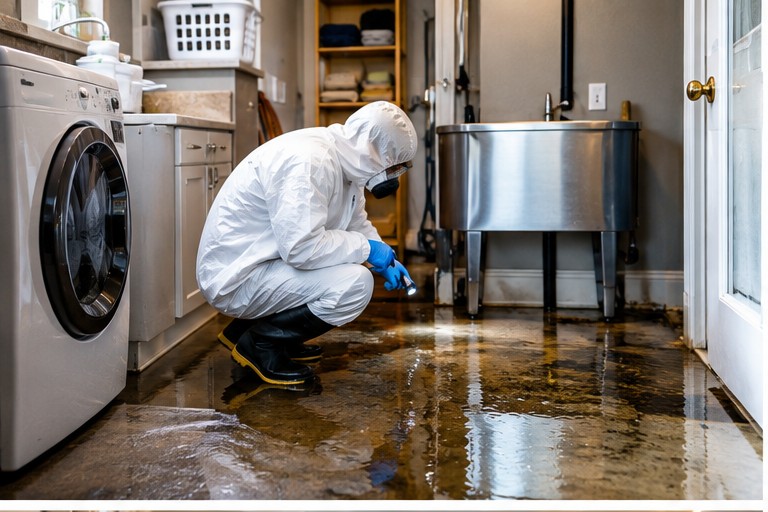
Wax ring and flange failures under toilets, vent stack blockages that slow drainage, and aging laterals are all on the list of how Rhine Valley backups begin. Every wet material and everything beneath it needs a moisture meter check — surfaces can look dry while the subfloor or wall cavity behind them stays wet.
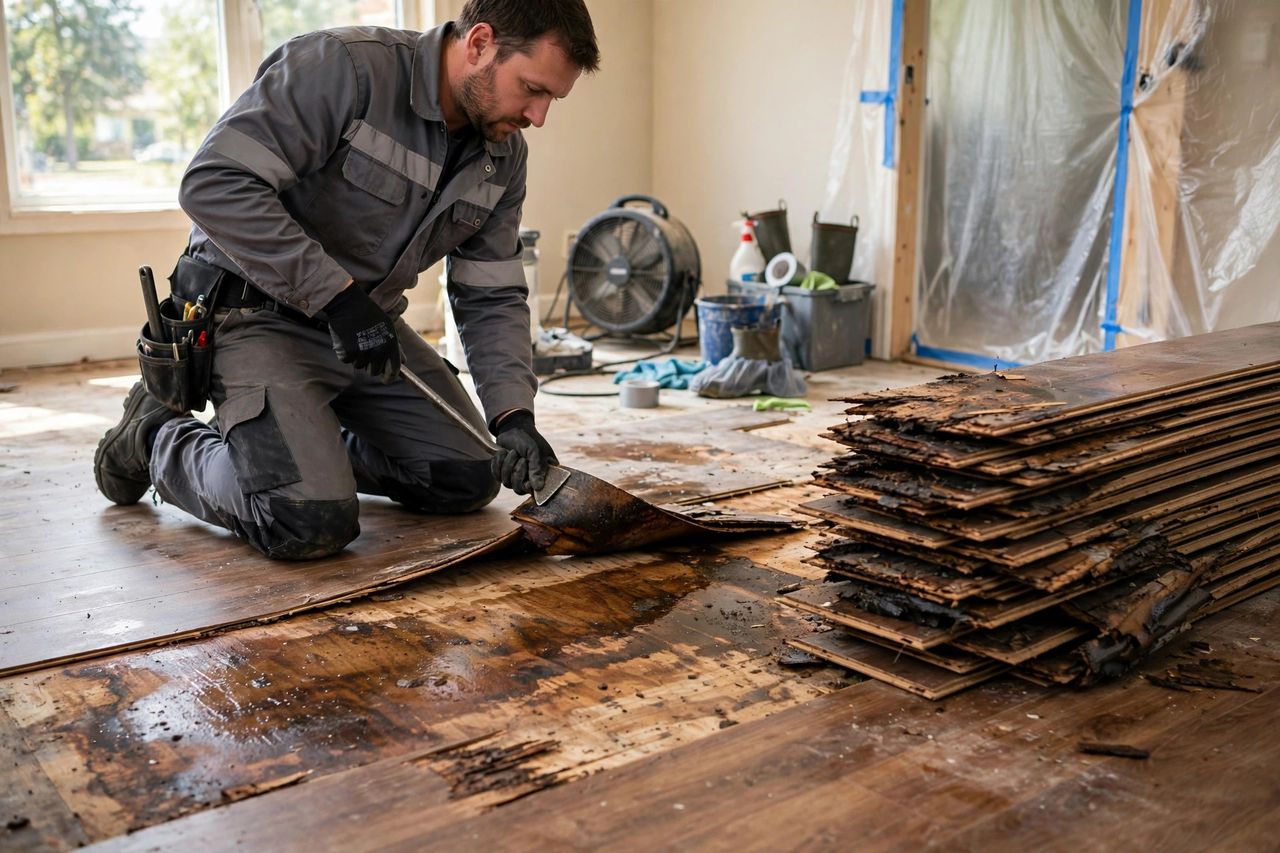
After a backup in Rhine Valley, the typical progression is high-volume extraction, detergent cleaning of hard surfaces, application of a disinfectant with adequate dwell time, and then air movers plus dehumidifiers pulling moisture out of framing and subflooring. Materials that stay damp become the next problem, since mold can take hold quickly in Texas humidity — which is why hidden moisture gets checked with a meter instead of a glance.
The fastest way to useful answers for Rhine Valley is to match your situation to one of these service topics — each page goes deep on its own scenario instead of repeating generic advice. Matching the page to the problem saves time, because the questions you need answered change with the kind of backup you had.
In Rhine Valley, a backup usually shows up as a toilet that will not drain, water rising in a shower or tub, a floor drain in the garage or laundry pushing water up, or a strong sewage odor near fixtures. The pattern tells you a lot: a single fixture acting up points to a local clog, while several fixtures backing up at once — especially the lowest drain in the home — usually means the main sewer line is blocked.
When drains back up in Rhine Valley, a plumber's job is the pipe: clearing roots, grease, or debris from the sewer lateral via the cleanout. The cleanup job is everything the water touched inside the home. If neighbors on your Rhine Valley street are backing up at the same time, the problem may sit in public infrastructure — contact CCMA, the regional wastewater provider, alongside arranging cleanup for your own property.
Schertz, Texas
Extraction, cleanup, sanitation, odor, moisture, and restoration planning.
Call to discuss your cleanup situation
In Rhine Valley, walk the full contamination path before committing to a plan — wastewater rarely stays where you first see it, and the rooms you skip are the ones that cause trouble later. Drying equipment like air movers and dehumidifiers does the heavy lifting after cleaning, pulling moisture out of framing and subflooring over days, not hours.
The neighborhood name helps you land on the right page, but the cleanup itself depends on what happened at your property. In Rhine Valley, the most useful starting point is to identify the source, the direction the wastewater traveled, and the materials it contacted. A toilet overflow, sewer-line backup, floor-drain backup, and septic event can each leave a different contamination trail, even when the visible mess looks similar.
The Rhine Valley cleanup sequence protects the rest of the house too — containment barriers and filtered air keep contaminants from drifting into clean rooms during the work. Verification beats assumption at every stage: visual checks find the obvious, but moisture meters find what the eye misses.
These images show the general types of conditions and equipment discussed on this page, not a specific completed job.
Call the local number to discuss the situation and identify the relevant service page.