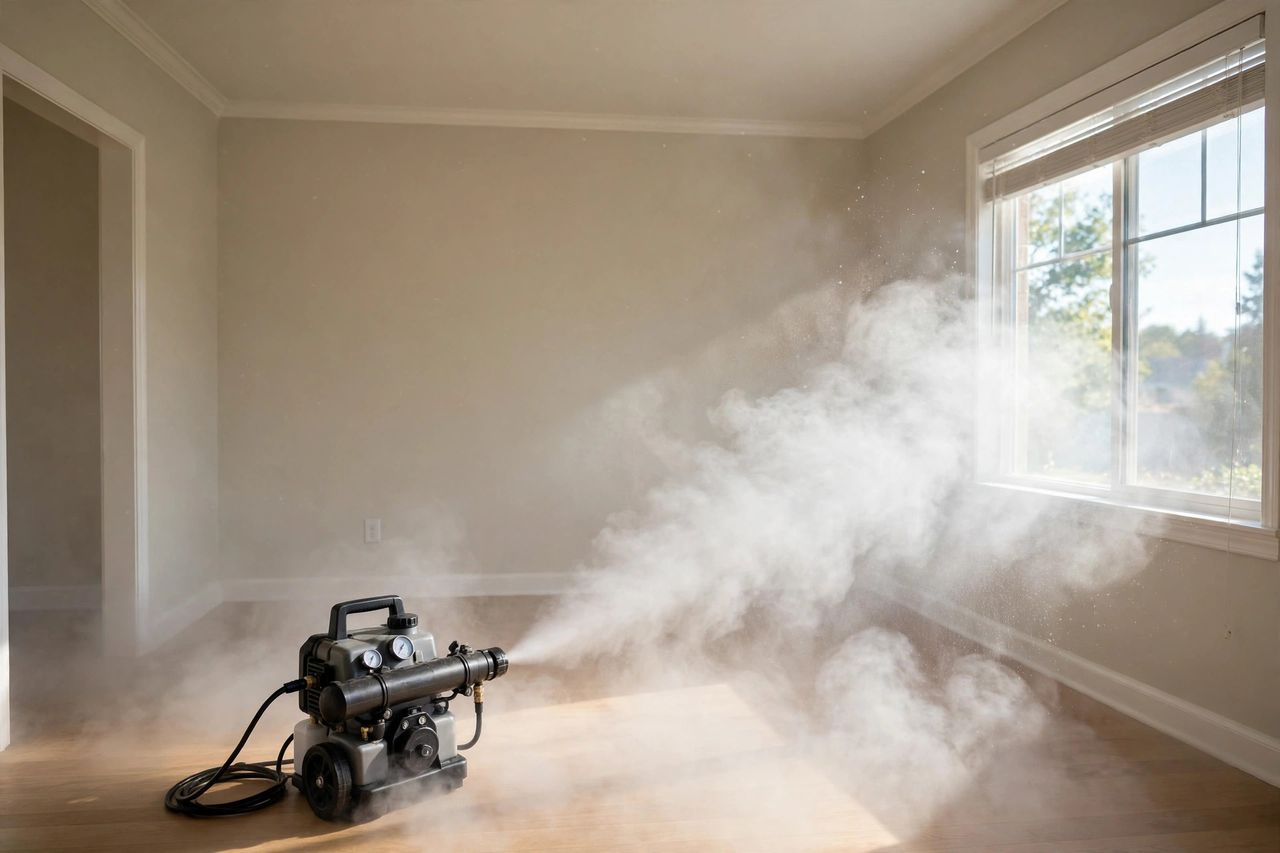
What is sewage spill cleanup? A localized spill can still create a meaningful contamination zone. The important question is not only how much water was visible, but where the wastewater traveled and which surfaces and contents were contacted.
How sewage spill cleanup is approached
A localized spill can still create a meaningful contamination zone. The important question is not only how much water was visible, but where the wastewater traveled and which surfaces and contents were contacted.
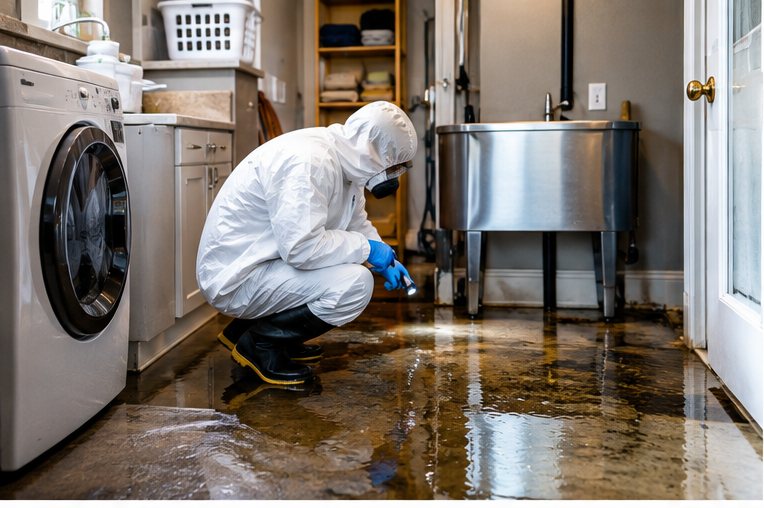
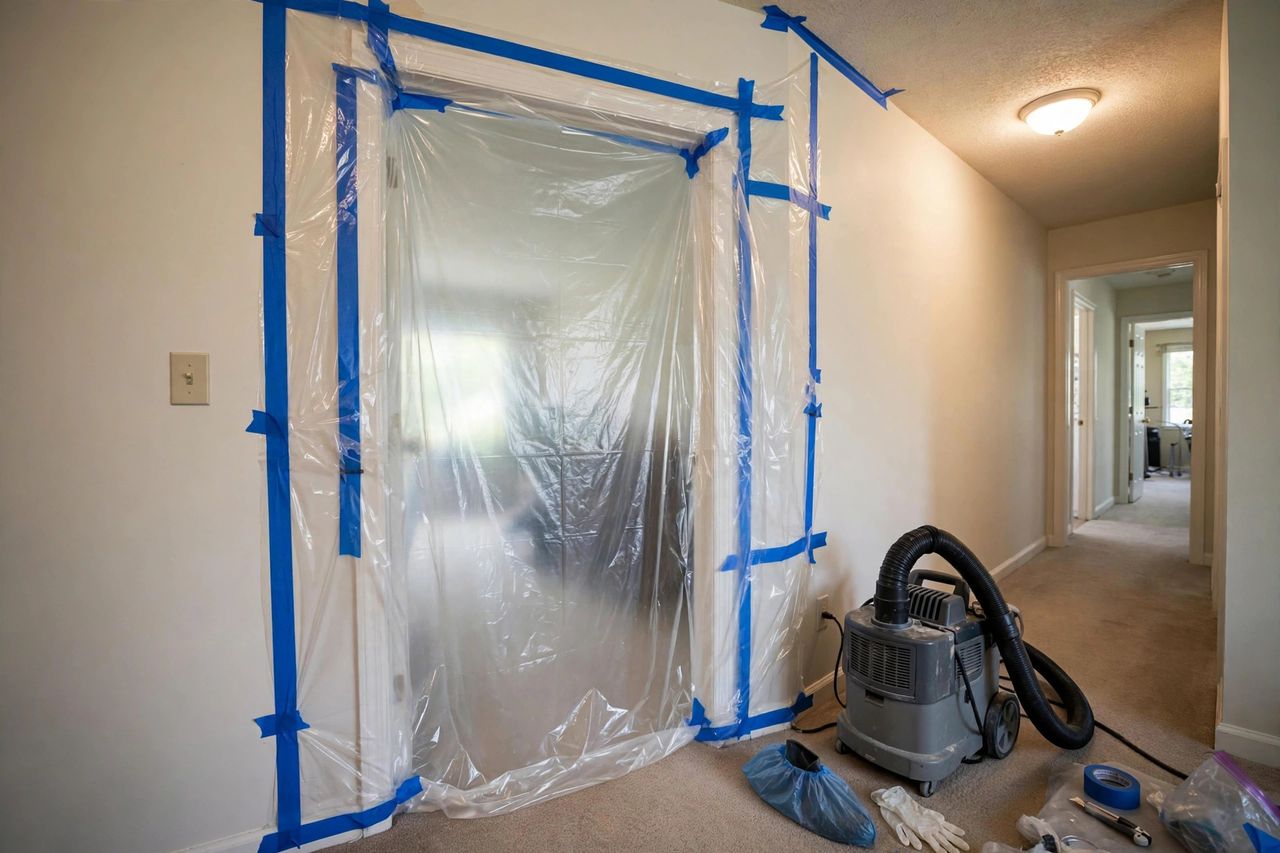
A ‘small’ sewage spill is deceptive. A floor-drain backup in the laundry room can send water under the washer, behind the dryer, into the wall base, and across the threshold into the next room — all from a spill that looked like a puddle. The work starts by tracing the spill path outward from the source, including places that look dry, then extracting, cleaning, and disinfecting the whole affected zone. Absorbent barriers contain it first so the cleanup doesn't chase a moving target.
Conditions that determine the cleanup scope
The scope is driven by the spill's source, the volume, the path the wastewater traveled, and the surfaces and contents it contacted — including what it reached underneath or behind. A localized spill can still require material removal, sanitation, and drying if the wastewater found its way into porous or hidden areas.
Typical cleanup sequence
Assess the source and contamination path
Control the affected area and reduce unnecessary exposure
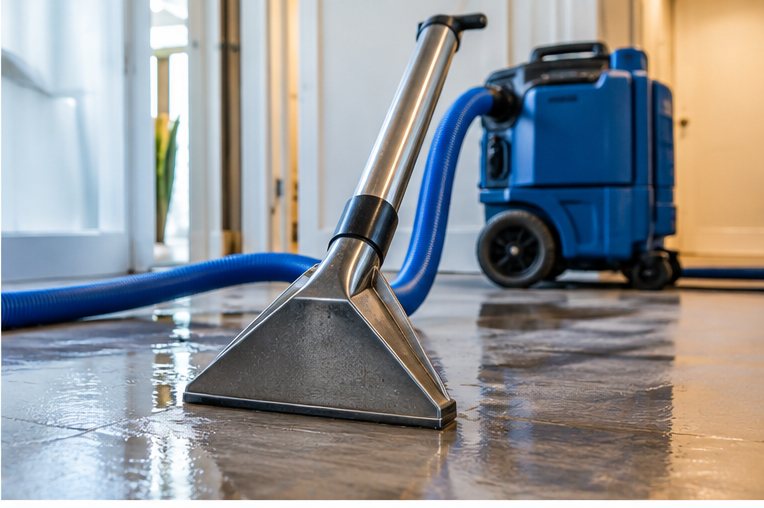
Remove wastewater and contaminated materials where appropriate
Physically clean affected surfaces and contents that can be retained
Dry and monitor affected areas for remaining moisture
Address odor, microbial growth, repairs, and restoration needs
Materials that may be affected
Spills hit what's nearby: laundry room floors and walls, the bases of appliances, stored items on the floor, baseboards, and the bottom edge of drywall. Because the volume is smaller, hard surfaces often survive with thorough cleaning and disinfection — but anything porous that sat in sewage (cardboard, fabric, carpet squares) usually doesn't. The spill path, not the puddle size, sets the scope.
What to do before cleanup
- Keep people and pets away from the contaminated water until the area is sanitized.
- Do not mix cleaning chemicals or improvise treatments; household chemistry cannot make sewage safe.
- Do not run fans that blow across contaminated water; professionals use containment and HEPA-filtered air instead.
- Photograph visible damage for your records before cleanup alters the scene.
- Find out whether the source is still active— coordinate the fix with the cleanup, not after it.
What not to assume
With Sewage Spill Cleanup, a surface that looks dry is not automatically clean — contamination is measured by what the water carried, not by how the surface looks now. Drywall, carpet pad, and insulation that contacted sewage usually come out; tile, concrete, and sealed surfaces can usually be restored.
Schertz context
Common Schertz spill scenarios: washing machine drain backups, AC condensate lines tied into sewer drains, and garage floor drains surcharging during heavy use. The City of Schertz's wastewater information notes that improper disposal contributes to blockages, and CCMA is the regional wastewater provider if a spill hints at a bigger line problem.
Questions people ask about sewage spill cleanup
What is sewage spill cleanup?
Sewage spill cleanup is a focused cleanup for a localized sewage spill — from a drain, toilet, sewer line, or wastewater system — where the event is contained to a defined area rather than a whole-property backup. Even a small spill creates a real contamination zone: the important question is not only how much water was visible, but where the wastewater traveled and which surfaces and contents were contacted.
When is sewage spill cleanup needed?
It is needed when a contained spill involves sewage or wastewater and ordinary household cleaning cannot safely address it — spills that reached porous materials, seeped under fixtures or cabinets, left persistent odor, or involved enough volume to spread beyond the immediate spot. A small spill in the wrong place (under a vanity, behind a toilet) can matter more than a larger one on open tile.
Can the visible water be the whole problem?
Often not. Spills follow gravity and gaps: wastewater runs under baseboards, seeps into grout and subflooring, wicks into drywall, and hides behind fixtures. The visible spill area is usually smaller than the actual contamination zone, so the assessment traces the spill's path rather than trusting the visible boundary.
What should happen before deodorizing?
Contain the spill, remove the wastewater and any contaminated debris, clean residues from surfaces, and check for moisture in adjacent materials first. Because spill odor comes from residues or damp materials the spill reached, deodorizing before those are addressed just covers up a source that is still present.
What if the backup appears to be a public sewer problem?
If the spill traces back to a line that may be public rather than a fixture problem, contact the appropriate municipal or utility authority in addition to cleaning up the spill. The City of Schertz identifies CCMA as the regional wastewater provider serving Schertz and nearby communities. Cleanup and diagnosis are separate tasks.