What is sewer line backup cleanup? A sewer line backup can introduce wastewater from a drain or line into a building. Cleanup should distinguish the visible entry point from the full path the wastewater traveled through floors, walls, fixtures, or low areas.
How sewer line backup cleanup is approached
A sewer line backup can introduce wastewater from a drain or line into a building. Cleanup should distinguish the visible entry point from the full path the wastewater traveled through floors, walls, fixtures, or low areas.
A sewer-line backup is rarely a single-fixture problem. When the lateral — the pipe connecting your home to the city main — blocks with grease, wipes, or tree roots, wastewater takes the lowest exit: floor drains, tubs, and toilets, often several at once. Cleanup starts by noting which fixtures backed up (that pattern tells a plumber a lot), then mapping everywhere the water traveled. The line itself needs a camera inspection or clearing by a plumber; cleanup without that just waits for the encore.
Conditions that determine the cleanup scope
The scope depends on where the backup originated, how many fixtures or rooms it reached, the path the wastewater traveled, and which materials were contacted. Because a line backup can affect several areas at once, the assessment covers the full spread — and the source itself needs diagnosis by the right plumbing or utility party.
Typical cleanup sequence
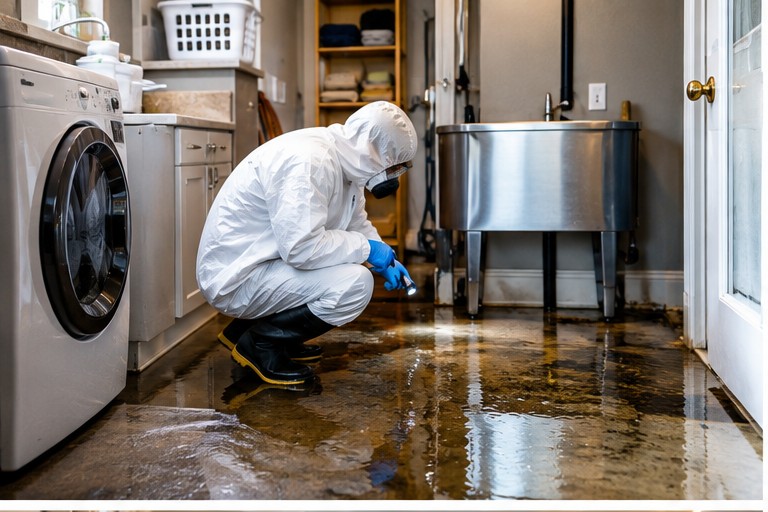
Assess the source and contamination path
Control the affected area and reduce unnecessary exposure
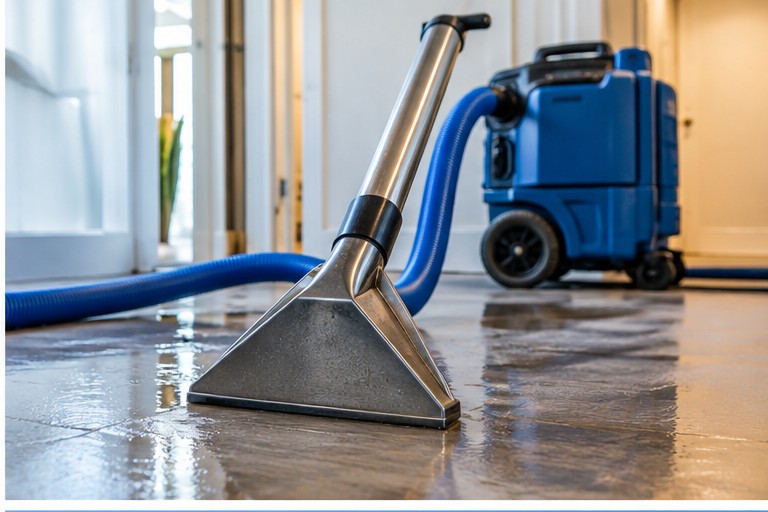
Remove wastewater and contaminated materials where appropriate
Physically clean affected surfaces and contents that can be retained
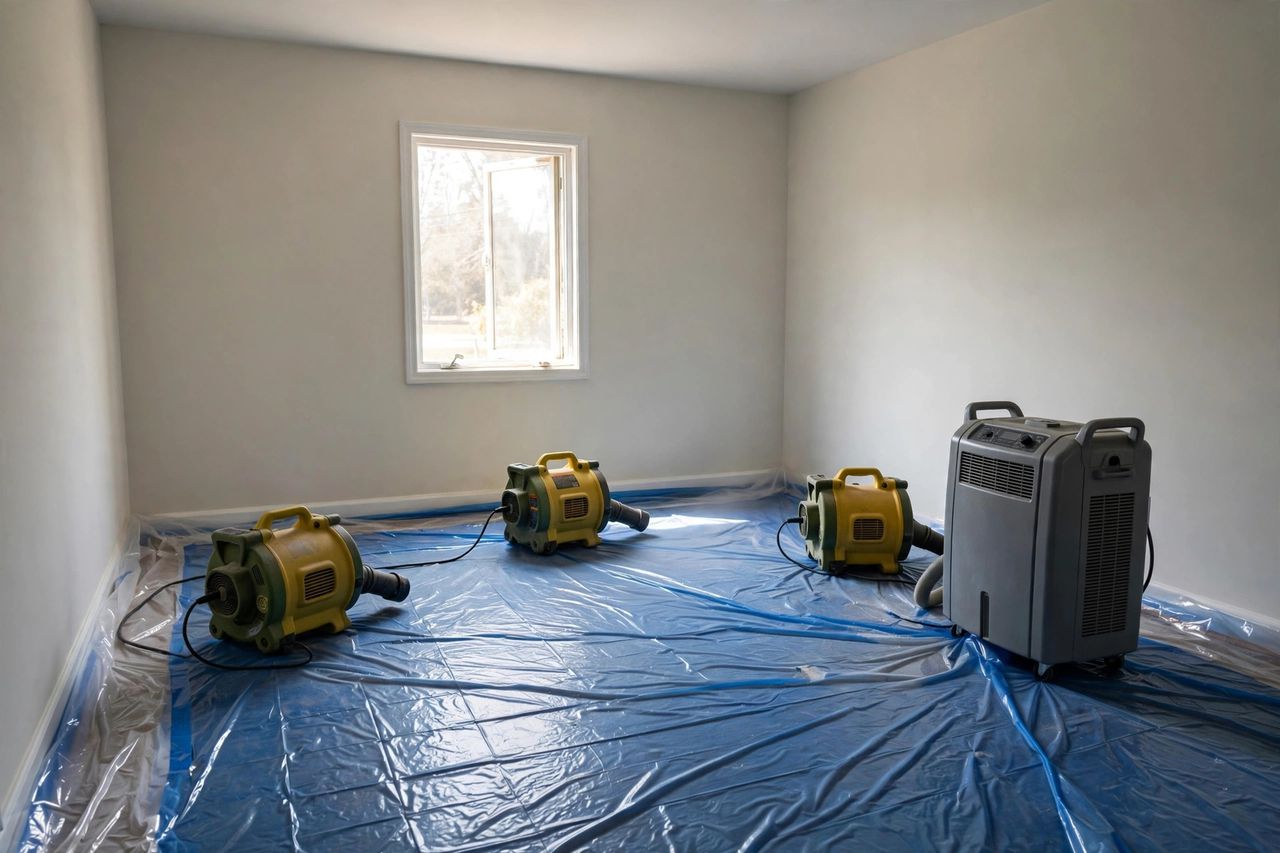
Dry and monitor affected areas for remaining moisture
Address odor, microbial growth, repairs, and restoration needs
Materials that may be affected
Line backups spread wide: bathroom floors, tile and grout, tub and shower bases, toilet bases and wax rings, vanity cabinets, hallway carpet, and whatever was stored low. Sewage under pressure can also push up through floor drains in laundry rooms and garages. Porous materials in the path — carpet pad, drywall bottoms, particleboard vanities — are usually removed; tile, porcelain, and concrete can be disinfected and kept.
What to do before cleanup
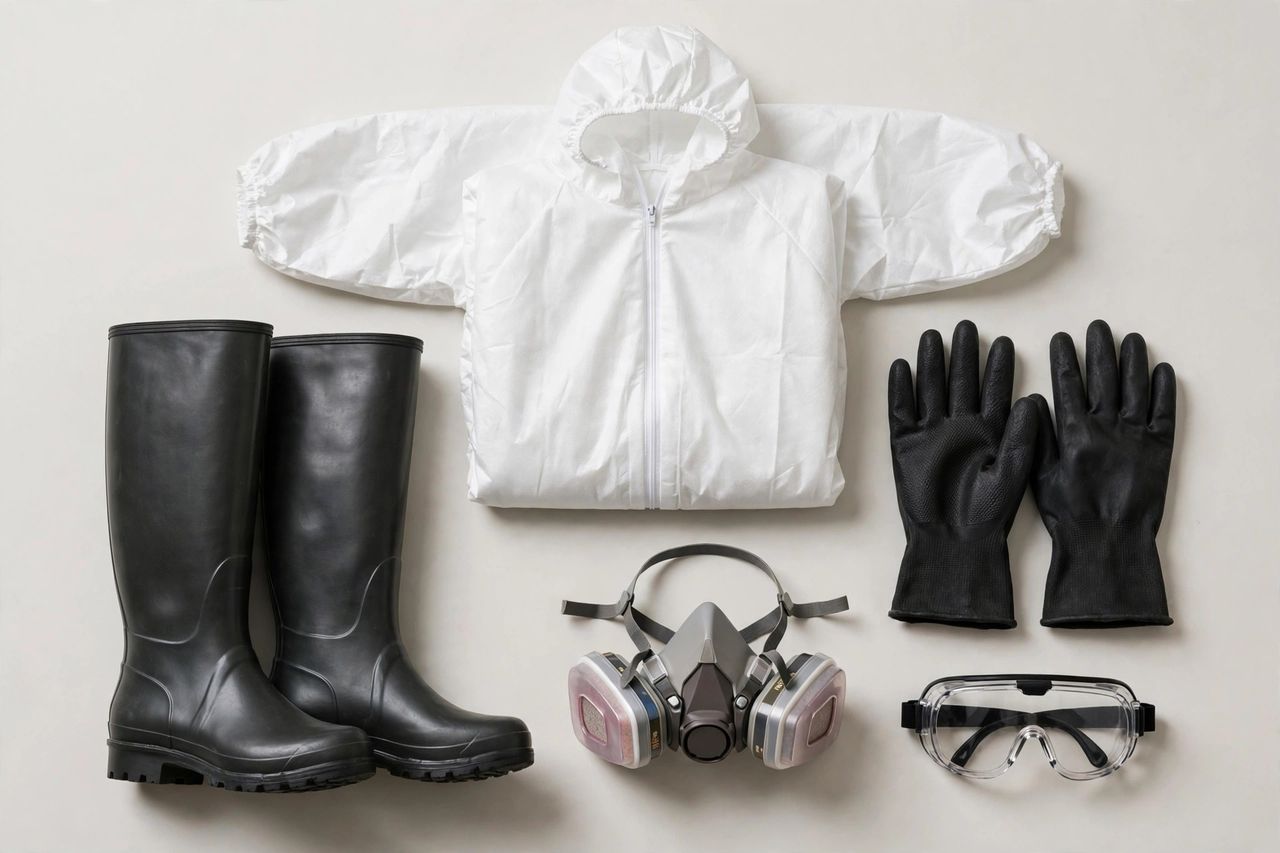
- Restrict access to the affected area— exposure is a health risk.
- Do not experiment with chemical mixes on sewage— some combinations release dangerous fumes.
- Do not use household fans on standing wastewater— it spreads contaminated aerosols through the property.
- Take pictures before anything is disturbed in case they are needed later.
- Determine whether the blockage is cleared or ongoing— cleanup cannot succeed while water is still coming in.
What not to assume
Sewer Line Backup Cleanup decisions start from the contamination, not the appearance — Category 3 water changes what ‘clean’ means for every material it touched. Porous materials that absorbed wastewater are typically removed, while hard, non-porous surfaces can often be cleaned and disinfected.
Schertz context
Schertz's older neighborhoods still have clay and cast-iron laterals that tree roots love, while grease and ‘flushable’ wipes clog newer PVC lines just as effectively. The City of Schertz's wastewater page ties blockages to improper disposal and identifies CCMA as the regional wastewater provider — if multiple homes on your street are backing up, that's a public-main conversation, not just a plumbing one.
Questions people ask about sewer line backup cleanup
What is sewer line backup cleanup?
Sewer line backup cleanup addresses contamination caused when a sewer line — a private lateral or a shared line — backs wastewater up into a building through drains, toilets, or low fixtures. Cleanup has to distinguish the visible entry point from the full path the wastewater traveled through floors, walls, fixtures, and low areas. The exact scope depends on the source, the spread, the materials contacted, and moisture conditions.
When is sewer line backup cleanup needed?
It is needed when wastewater enters through drains, toilets, or floor drains because a sewer line is blocked or overwhelmed. Because line backups often push water into multiple fixtures or rooms at once, they are frequently larger than single-fixture events. The source also needs proper plumbing or utility diagnosis alongside cleanup, since removing water will not prevent the next backup.
Can the visible water be the whole problem?
No — and that is especially true for line backups. The entry point that is visible (a floor drain, a toilet) is just where the water surfaced; it may have traveled through pipes, under slabs, and across rooms before appearing. The assessment should trace where the water came from and everywhere it went, not just where it pooled.
What should happen before deodorizing?
First confirm the source is controlled, remove wastewater and residues, clean and address affected materials, and manage remaining moisture. With line backups, deodorizing before the line issue and the contamination are resolved just masks an odor that will return. Odor treatment works best once the underlying source is controlled.
What if the backup appears to be a public sewer problem?
This is the key question for line backups. If the blockage or surcharge appears to be in a public line rather than the property's lateral, contact the appropriate municipal or utility authority — the City of Schertz identifies CCMA as the regional wastewater provider. Cleanup on the property and utility diagnosis are separate but related tasks.