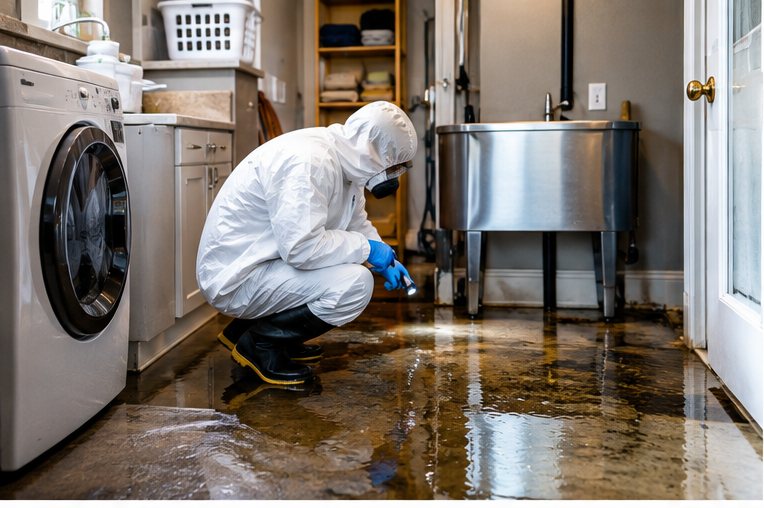
What is sewage water extraction? Extraction removes standing contaminated water so the affected area can be cleaned and evaluated. Extraction alone does not complete the job: residues, porous materials, hidden moisture, odor, and secondary damage still need attention.
How sewage water extraction is approached
Extraction removes standing contaminated water so the affected area can be cleaned and evaluated. Extraction alone does not complete the job: residues, porous materials, hidden moisture, odor, and secondary damage still need attention.
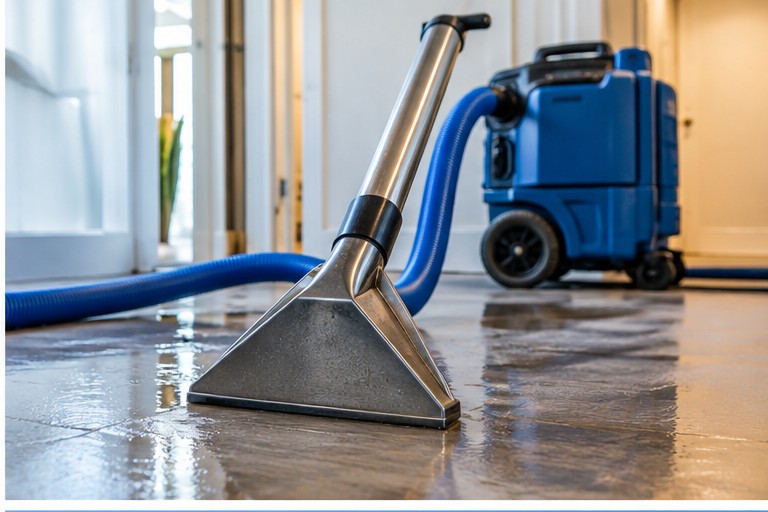
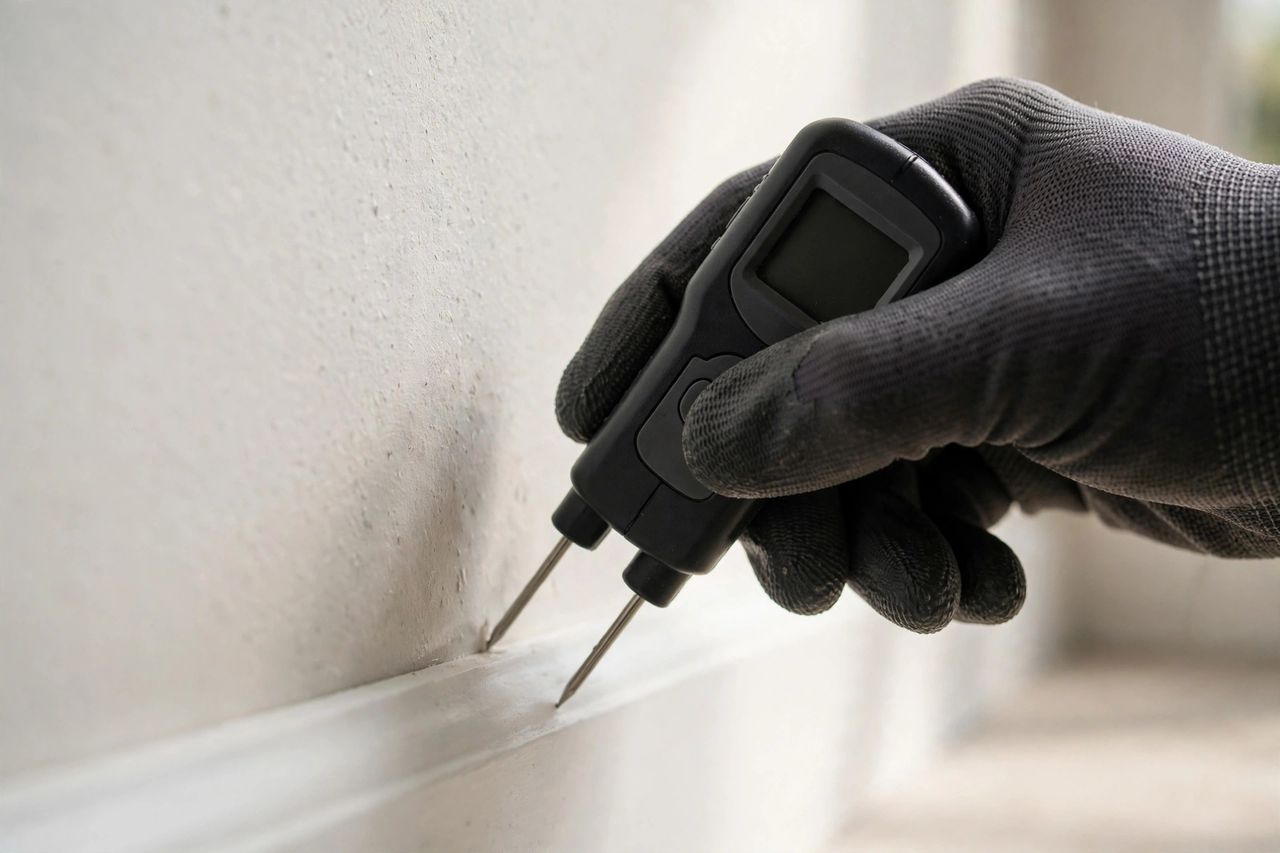
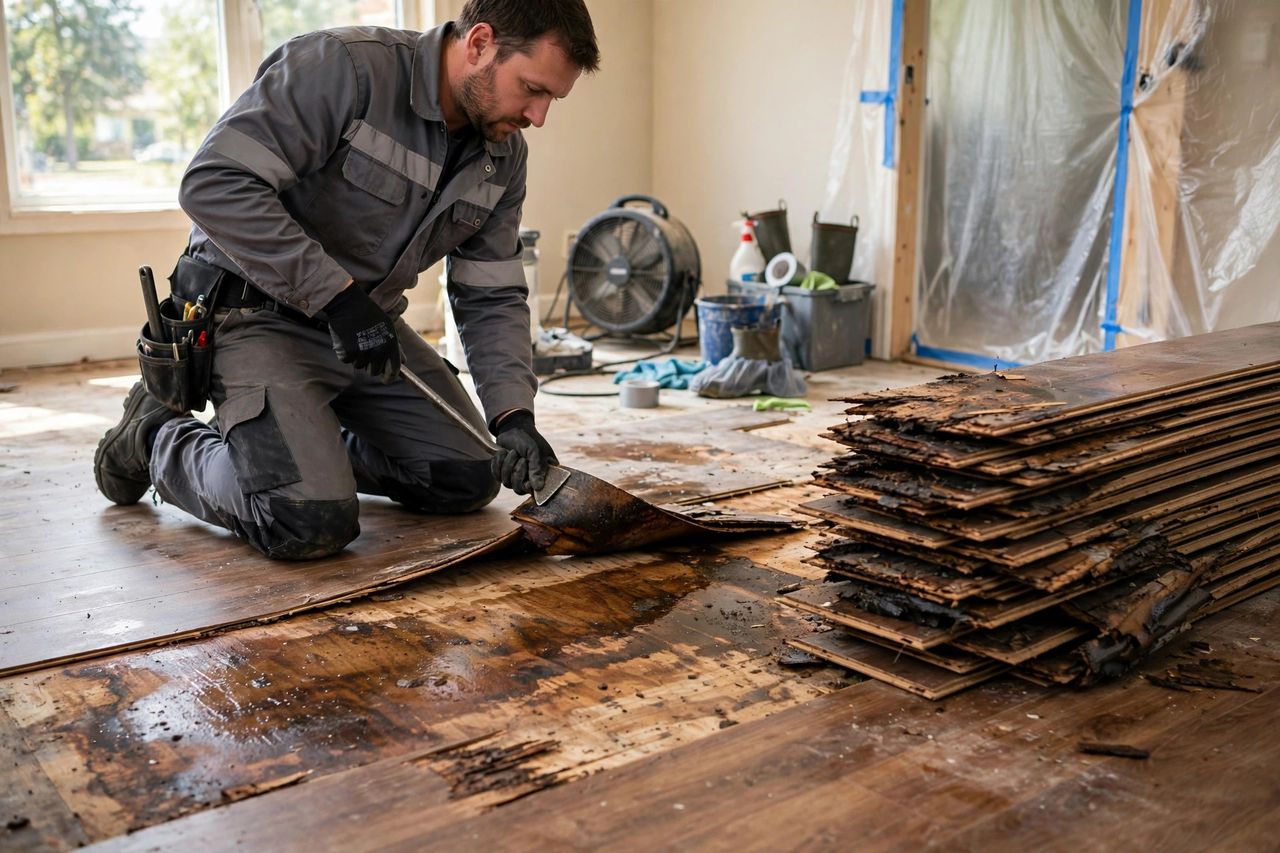
Extraction is the mechanical first step: truck-mounted or portable extractors and wet vacuums pull standing wastewater off floors, and extraction wands work it out of carpet and grout lines. But pulling up visible water is only half the job. Sewage wicks sideways under flooring, down into subfloor, and up into drywall — so moisture meters follow the extraction to map what's still wet. Anything still damp gets dried with air movers and dehumidifiers, or removed.
Conditions that determine the cleanup scope
The extraction scope is set by the volume of standing water, how far it spread, the surfaces and contents beneath it, and whether water is trapped where equipment cannot reach directly. What follows extraction — cleaning, material decisions, drying — is determined by contamination and hidden moisture, not by the extraction step alone.
Typical cleanup sequence
Assess the source and contamination path
Control the affected area and reduce unnecessary exposure
Remove wastewater and contaminated materials where appropriate
Physically clean affected surfaces and contents that can be retained
Dry and monitor affected areas for remaining moisture
Address odor, microbial growth, repairs, and restoration needs
Materials that may be affected
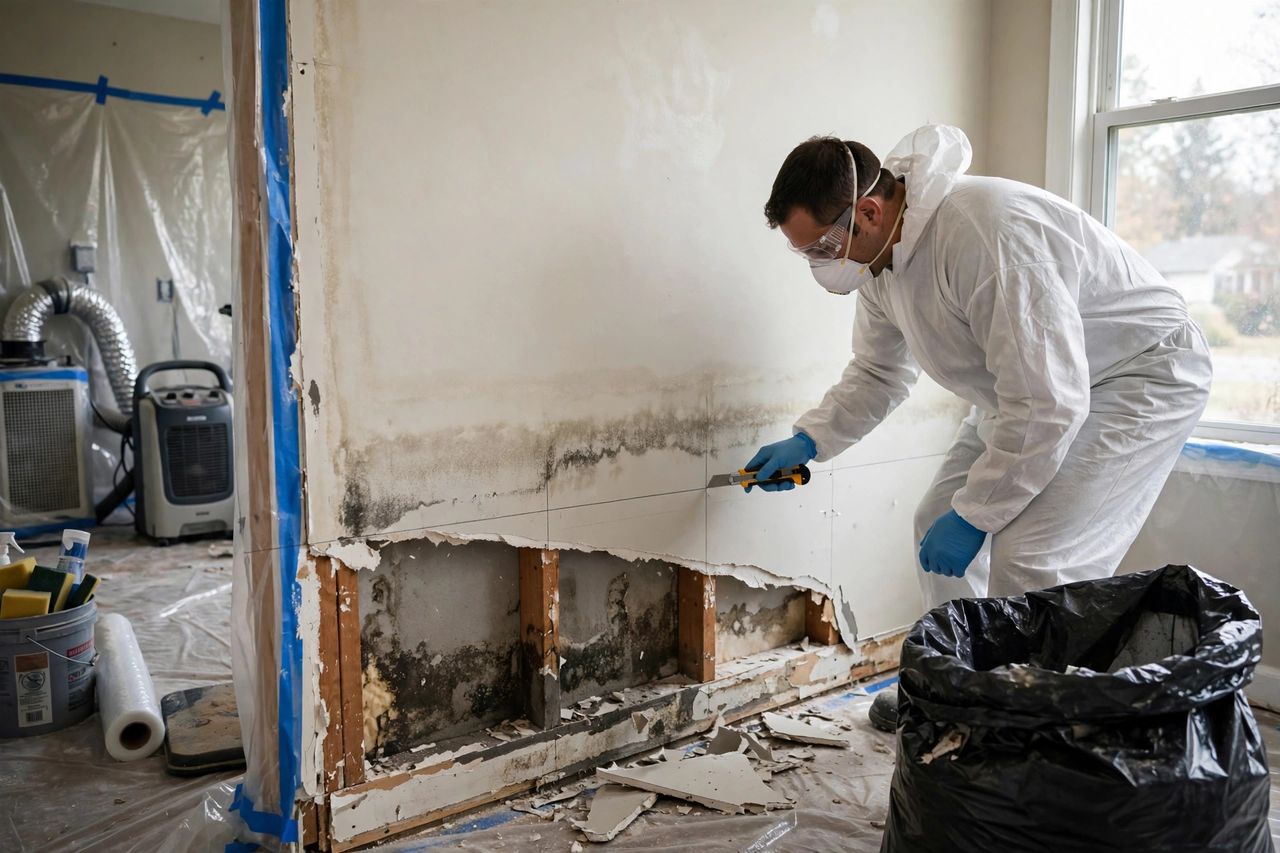
Extraction deals with water first, materials second. Carpet gives up surface water to the wand but the pad underneath usually holds sewage and gets discarded. Tile and concrete release water well; wood flooring and laminate trap it at the seams and may cup or swell. Drywall wicks moisture upward from the floor line. The moisture map decides what dries in place and what comes out.
What to do before cleanup
- Keep everyone clear of standing wastewater for everyone's safety.
- Never combine bleach with other household cleaners— leave disinfection to the right products and dwell times.
- Avoid circulating air through the affected area until extraction and cleaning are complete.
- Document the affected areas with photos for reference as the job progresses.
- Check if wastewater is still entering the home before scheduling extraction and sanitizing.
What not to assume
For Sewage Water Extraction in Schertz, appearance is a poor judge: sewage can leave biological contamination on materials that look perfectly dry. Removal versus cleaning is a material-by-material decision, made against the contamination rather than against appearances.
Schertz context
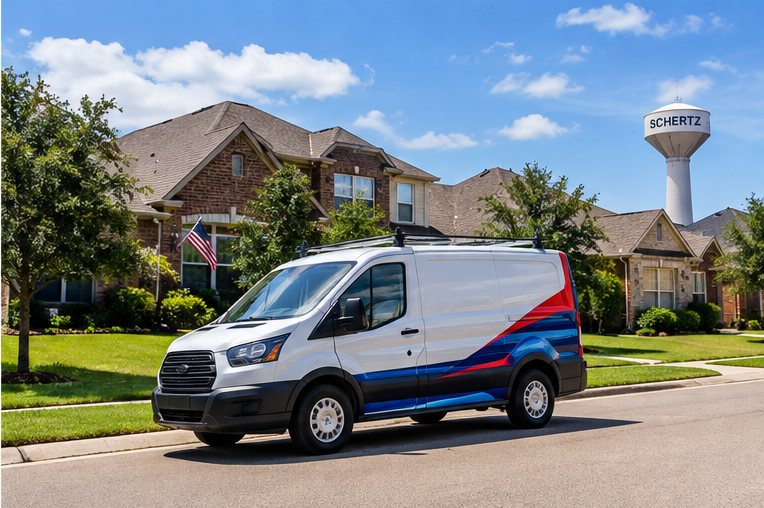
Schertz's mix of slab-on-grade and pier-and-beam homes changes the extraction picture: on slab, water spreads thin and wide under flooring; with pier-and-beam, it can drop into the crawl space and sit there. The City of Schertz points to CCMA as the regional wastewater provider when the source looks like a public-line problem.
Questions people ask about sewage water extraction
What is sewage water extraction?
Sewage water extraction is the removal of standing contaminated water from an affected area — the mechanical first step that makes cleaning, inspection, and drying possible. Extraction alone does not complete the job: residues, porous materials, hidden moisture, odor, and secondary damage still need attention. The scope depends on the water's source, volume, spread, and what it contacted.
When is sewage water extraction needed?
It is needed whenever contaminated water is standing in a space — after a backup, overflow, spill, or intrusion — and has to come out before anything else can be evaluated. The deeper the water and the longer it has stood, the more it has worked into materials, so extraction is both urgent and only the beginning of the cleanup sequence.
Can the visible water be the whole problem?
Extraction handles the water that can be seen and reached, but wastewater also wicks into drywall, migrates under flooring, and settles into low or hidden areas. That is why extraction is followed by inspection and moisture checks: removing standing water reveals the contamination and moisture problems that extraction itself cannot solve.
What should happen before deodorizing?
Extract the water first — that is this step — then clean soils and residues, address affected materials, and verify drying before any deodorizing. Deodorizing standing water or wet materials accomplishes nothing; odor work belongs at the end of the sequence, once the source and moisture are controlled.
What if the backup appears to be a public sewer problem?
Contact the appropriate municipal or utility authority in addition to addressing the water on the property. The City of Schertz identifies CCMA as the regional wastewater provider serving Schertz and nearby communities. Extraction and utility diagnosis are separate tasks that can proceed in parallel.